
There is no single national average for hoarding cleanup that means anything useful to your situation. A one-bedroom apartment with moderate clutter and no biohazard contamination is a completely different job than a four-bedroom house with years of animal waste, active mold, and structural damage. This guide gives you the real pricing factors and honest ranges — so you can plan, compare estimates, and avoid being overcharged or undersold.
The cost of professional hoarding cleanup varies more than almost any other home service — and that range exists for legitimate reasons. Unlike carpet cleaning or window washing, hoarding cleanup involves an enormous range of severity, square footage, contamination type, disposal volume, and structural damage. A company that gives you a firm price over the phone without seeing the property is either guessing or setting you up for surprise charges later.
At Post Trauma Scene Decon, we provide written estimates after an on-site assessment — every time, with no exceptions. We serve families, property managers, insurance adjusters, and estate attorneys across North Country New York, including St. Lawrence, Franklin, Clinton, Essex, Lewis, and Jefferson counties. This guide reflects how we actually price this work, and what you should know before you call anyone.
The 6 Factors That Drive Hoarding Cleanup Cost
Every hoarding job is priced based on a combination of the following factors. Understanding them gives you the tools to evaluate any estimate you receive.
Square footage and number of affected rooms
The total area of the home and how many rooms are involved directly affects crew size, hours, and equipment requirements. A single cluttered bedroom is not the same job as a 2,000 sq ft house where every room, garage, and outbuilding is filled floor to ceiling.
Volume and weight of material to be removed
Disposal is priced by load or by weight at licensed disposal facilities. In Northern New York, disposal runs $189.75–$197.80 per ton depending on the facility (SRMT vs. St. Lawrence County Solid Waste). A heavily hoarded home may require multiple dump trailer loads. This is a real, documented cost — not a markup.
Presence and extent of biohazard contamination
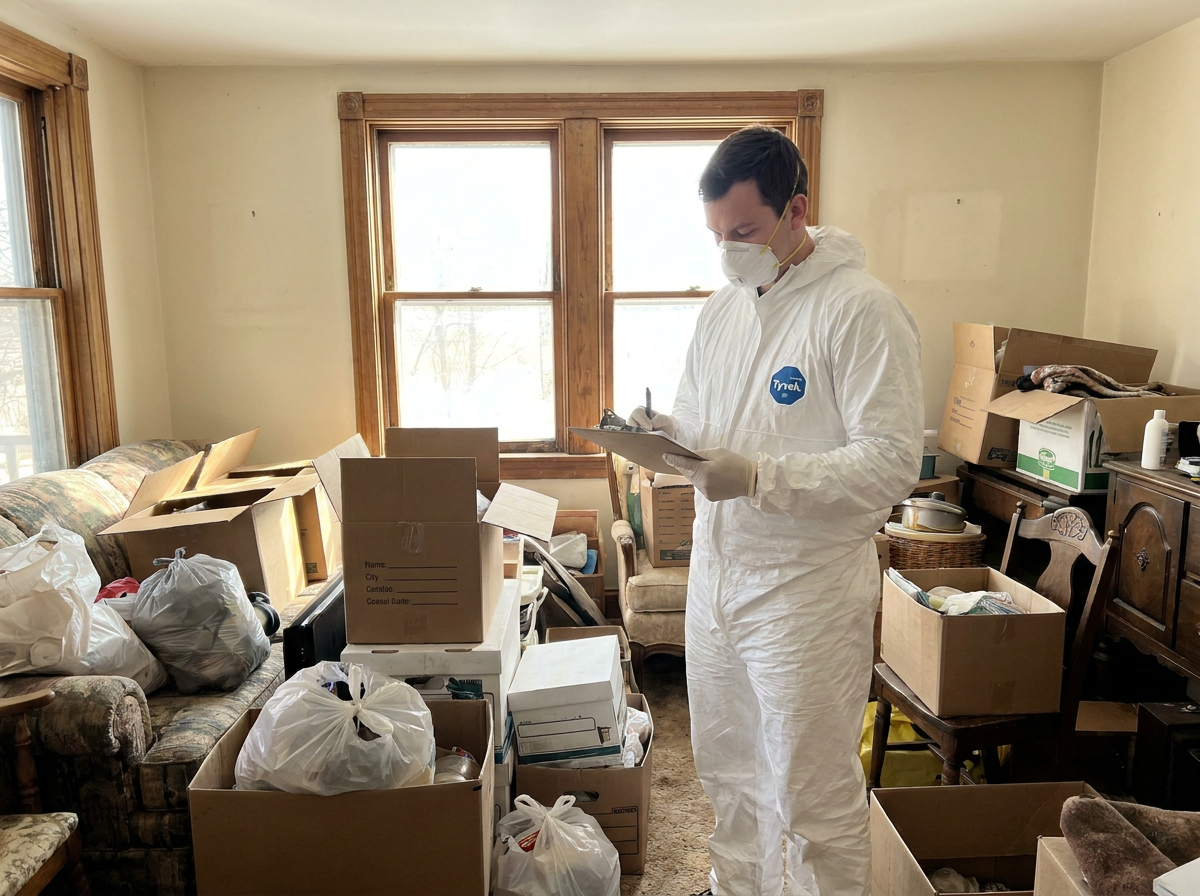
This is the single biggest cost driver. A home with animal hoarding (saturated subflooring, walls, and insulation with pet waste), human waste due to plumbing failure or incontinence, rodent infestation with droppings throughout, or any decomposition requires full biohazard protocols — Tyvek suits, 3M respirators, EPA-registered disinfectants, HEPA filtration, ozone treatment, and licensed biohazard waste disposal. These materials and procedures have real costs that standard junk removal does not incur.
Mold remediation requirements
Mold is found in the majority of severely hoarded homes — behind walls, under flooring, and in ceilings where moisture has been trapped for years. When mold is discovered, it requires IICRC-certified mold remediation: containment, removal of contaminated materials, antimicrobial treatment, and air filtration. This is scoped and priced as part of the remediation, not a separate billing surprise — but it does add to the total.
Structural damage and subfloor condition
Years of animal waste, water damage from ignored leaks, and the sheer weight of accumulated material can damage subflooring, joists, drywall, and framing. Structural repair is outside the scope of remediation and requires a separate contractor — but we identify what is damaged during the cleanup and document it so the property owner knows exactly what comes next.
Access difficulty and travel
Rural North Country properties can add travel time and fuel costs, particularly in remote areas like Star Lake, Edwards, or the more isolated parts of Essex and Lewis counties. We price travel transparently — $0.73/mile for remote locations, or a flat $150 fee for jobs over 200 miles from our base.
Realistic Cost Ranges for Hoarding Cleanup in Northern New York
These ranges reflect what jobs in our region actually cost — not national averages from aggregator sites that do not reflect local disposal costs, labor rates, or the specific conditions in North Country homes.
| Job Type | Typical Range | Key Variables |
|---|---|---|
| Mild clutter — 1–2 rooms, no biohazard | $800 – $2,500 | Room count, disposal volume |
| Moderate hoarding — whole unit, limited contamination | $2,500 – $6,000 | Square footage, load count, light mold |
| Severe hoarding — full home, biohazard present | $6,000 – $15,000+ | Biohazard extent, mold, subflooring condition |
| Animal hoarding — extensive pet waste throughout | $8,000 – $20,000+ | Saturation depth, subfloor/wall damage, load count |
| Estate cleanup — post-death, multi-room, biohazard | $5,000 – $18,000 | Discovered decomposition, mold, disposal volume |
Ranges are for professional biohazard-capable remediation including disposal, PPE, and equipment. Junk removal only (no biohazard) runs lower. Structural repair is separate.
Why the range is so wide: The difference between a $1,500 job and a $15,000 job is almost entirely determined by biohazard contamination and disposal volume — factors that cannot be assessed without walking the property. Any estimate given without an on-site visit is not a real estimate.
What Disposal Actually Costs in Northern New York
Disposal is a significant and often misunderstood line item in hoarding cleanup. Unlike a simple junk haul, professionally remediated material — especially biohazard-contaminated material — must be transported to licensed facilities and properly documented. Here is what disposal actually looks like.
Standard solid waste (general clutter, furniture, household items)
- →St. Lawrence County Solid Waste: $197.80/ton
- →SRMT (Akwesasne): $189.75/ton
- →A fully loaded 10 ft dump trailer typically weighs 3–5 tons depending on material density
Biohazard and regulated waste
- →Biohazard containers (Pureway Compliance, up to 18 gal): $280/container
- →Licensed biohazard waste pickup and disposal — priced per engagement
- →Contaminated drywall, subflooring, and insulation disposed as regulated waste
A company that quotes you a flat rate for a severely hoarded property without accounting for disposal weight and biohazard disposal is either not planning to handle the contamination properly, or will come back with additional charges once the job is underway. We document disposal costs in every written estimate.
Does Insurance Cover Hoarding Cleanup?
This is the question most families ask second, right after the price. The honest answer is: it depends on the policy and the cause of the contamination.
- •Biohazard contamination from a covered event — a burst pipe that led to sewage backup and mold, a fire that triggered water damage and subsequent mold growth
- •Death on the premises where the policy includes biohazard cleanup riders (some policies, particularly landlord policies, include this)
- •Pest-related damage where the infestation is documented and tied to a structural failure covered by the policy
- •Long-term accumulation not tied to a specific covered event — insurers typically treat hoarding as a maintenance issue rather than a covered peril
- •Gradual mold growth from deferred maintenance rather than a sudden covered event
- •Situations where the insurer argues the damage resulted from neglect rather than an insured risk
Even when coverage is uncertain, it is worth making the call to your insurer. We provide full photographic documentation, itemized scope of work, regulatory compliance citations, and chain-of-custody records for every job — exactly what adjusters need to evaluate a claim. We also work directly with adjusters when applicable, so you are not navigating the paperwork alone.
For more on how insurance intersects with remediation, see our post on what insurance covers in biohazard cleanup.
Hoarding Cleanup vs. Junk Removal: What You Are Actually Paying For
One of the most common mistakes families make is hiring a junk removal company for a job that requires biohazard remediation. The price difference is real, and so is the difference in what you get.
| Capability | Junk Removal | Biohazard Remediation |
|---|---|---|
| Haul away uncontaminated clutter | ✓ | ✓ |
| Biohazard PPE (Tyvek, respirator, gloves) | ✗ | ✓ |
| EPA-registered disinfection of contaminated surfaces | ✗ | ✓ |
| Licensed biohazard waste disposal | ✗ | ✓ |
| OSHA bloodborne pathogen compliance | ✗ | ✓ |
| IICRC-certified mold remediation | ✗ | ✓ |
| Ozone/HEPA odor elimination | ✗ | ✓ |
| Insurance documentation (chain of custody) | Rarely | ✓ |
| Subfloor/structural assessment | ✗ | ✓ |
A junk removal company that encounters animal waste, mold, or any biological contamination during a hoarding job is not equipped to handle it safely — for their workers or for the property. Disturbing contaminated material without proper PPE and containment can spread pathogens to clean areas and create a larger remediation problem. The lower upfront price can become a much higher total cost.
For situations with any biohazard contamination, certified remediation is not the more expensive option — it is the only safe option. The IICRC (Institute of Inspection, Cleaning and Restoration Certification) sets the industry standards for this work, and certification is the baseline credential to look for when evaluating companies.
What a Legitimate Estimate Should Include
When you receive an estimate for hoarding cleanup — from us or from anyone else — here is what a trustworthy written estimate includes.
- On-site assessment before pricing. No legitimate company prices hoarding jobs remotely. The variables are too significant. An estimate based on photos or a description is a guess, not a price.
- Itemized scope of work. What rooms, what contamination types, what materials will be removed, what treatments will be applied. Vague estimates like "full cleanup" with a single number invite scope creep disputes after the job.
- Disposal costs included or explicitly excluded. Disposal is a significant cost driver. A legitimate estimate either includes disposal or clearly states it will be billed separately at a documented per-ton rate. Surprises here are a red flag.
- Mold and structural findings noted separately. If mold or structural damage is discovered during assessment, it should be scoped separately — both so you understand the total picture and so it can be billed to insurance as a distinct line item if applicable.
- Payment terms clearly stated. Standard practice for private clients: 50% deposit to schedule, balance due on completion. Insurance and government clients billed on completion. Any company demanding full payment upfront before work begins is a warning sign.
Red Flags When Getting Hoarding Cleanup Quotes
The hoarding cleanup industry, like any service industry dealing with distressed situations, attracts some companies that take advantage of families who are overwhelmed and unfamiliar with what a job should cost. Here is what to watch out for.
Phone quotes without seeing the property
A number given over the phone is not an estimate. It is a number to get you to sign, which will change once they arrive.
No mention of biohazard certifications or disposal
If the company is not discussing PPE requirements, licensed biohazard disposal, and OSHA compliance, they are not planning to handle the contamination correctly.
High-pressure urgency
"We can start today but you have to sign now." Legitimate remediation companies give you time to review a written estimate. A hoarding situation that has existed for years can wait 24 hours for you to make an informed decision.
Full payment required upfront
Standard practice in the industry is a deposit to schedule and final payment on completion. Demanding full payment before work starts removes your leverage if the job is incomplete.
No written scope or contract
Everything should be in writing — what is included, what is excluded, how disputes will be handled, what happens if additional contamination is discovered. If a company is reluctant to put the scope in writing, do not sign.
How We Price Our Work — Transparent, No Surprises
We charge for hoarding cleanup based on the actual scope of the job — no hourly rate markups, no hidden labor fees, no surprise disposal charges. All labor costs are built into per-unit rates for the work being done. Disposal is billed at the actual documented facility rate. Our estimates are written, itemized, and provided before any work begins.
Our hoarding cleanup service page gives you an overview of our full process — from initial assessment through final walk-through and documentation. If you want to understand what a job will involve before we visit, our guide to hoarding cleanup services in Northern New York walks through the process in detail.
For families who cannot cover the full cost upfront, we offer payment plans through Acorn Financial — and we can work with your insurer or estate attorney on documentation when applicable. Private clients pay 50% to schedule and the remaining 50% on completion.
What the OSHA and EPA Say About This Work
Hoarding cleanup involving biological contamination is regulated work. OSHA's Bloodborne Pathogens Standard (29 CFR 1910.1030) requires that workers handling materials potentially contaminated with blood or other potentially infectious material use appropriate PPE, follow exposure control plans, and receive proper training. These are not optional — they are legal requirements.
The OSHA Bloodborne Pathogens Standard and associated guidance documents make clear that compliance requires training, documented procedures, and proper disposal — all of which add legitimate cost to the work. A company that skips these requirements is not just cutting corners on your job; they are violating federal workplace safety law and putting their workers and your property at risk.
We are OSHA-compliant for bloodborne pathogens and hazardous materials. Every team member working on a biohazard job has completed the required training and works in full OSHA-compliant PPE.
Frequently Asked Questions About Hoarding Cleanup Cost
Can I get a ballpark price without an on-site visit?
We can give you a very rough range based on what you describe — but it will be a wide range precisely because the factors that drive cost (contamination type and extent, disposal volume, mold, structural damage) cannot be assessed remotely. The only way to give you a real number is to walk the property. We offer free on-site assessments with no obligation.
Is there a cheaper option for mild hoarding with no biohazard?
Yes. For properties with moderate clutter, no biological contamination, and no mold, a standard junk removal company may be appropriate and will cost significantly less than biohazard remediation. We will tell you honestly if a job does not require our level of service. What we will not do is quote you remediation pricing for a job that only needs a haul.
How long does hoarding cleanup take, and does that affect cost?
Duration depends on the scope. A single-room mild cleanup may take a day. A severely hoarded multi-room home with biohazard and mold can take three to five days. All labor is built into the per-unit pricing — you will not be billed by the hour for a job that runs longer than expected due to conditions we should have identified at assessment.
What if additional contamination is found after the job starts?
We scope as thoroughly as possible during the initial assessment, but hoarding environments sometimes hide contamination that is not visible until material is moved — mold behind walls, for example, or subflooring saturation under carpet. When this happens, we stop, document the discovery with photographs, and contact the client or their representative before expanding scope. We do not continue unapproved work.
Does the cost include odor removal?
Odor elimination is part of every biohazard remediation job we do — ozone treatment and HEPA air filtration are standard steps after source removal and disinfection. We do not charge separately for odor treatment when it is part of a remediation scope. For stand-alone odor jobs without a broader hoarding or biohazard cleanup, see our odor removal service.
Do you provide financing?
Yes. We offer payment plans through Acorn Financial for clients who need help with the cost. We also accept the standard 50% deposit / 50% on completion structure, which allows work to begin without the full amount due upfront.
What is included in every written estimate from Post Trauma Scene Decon:
- ✓Itemized scope of work by room and contamination type
- ✓Disposal costs at documented per-ton facility rates
- ✓Biohazard waste handling and disposal noted separately
- ✓Mold and structural findings scoped if discovered at assessment
- ✓Payment terms: 50% deposit to schedule, balance on completion
- ✓Full documentation provided for insurance and estate purposes
About Post Trauma Scene Decon
We are the only certified biohazard and trauma remediation company in Northern New York founded and led by a service-disabled veteran and former police officer and crime scene technician. Owner James Smith brings more than 20 years of experience working in and around trauma scenes. We hold IICRC certification, OSHA compliance, NYS DOL and DEC certification, BBB accreditation, SDVOB and HUBZone certification, and are the 2025 BBB Torch Award winner for Ethics. We serve St. Lawrence, Franklin, Clinton, Essex, Lewis, and Jefferson counties and respond 24/7.
"The families who call us about cost are not being cheap — they are being responsible. They want to understand what they are paying for and why. That is a reasonable expectation, and we meet it with a written estimate that breaks down every line item before a single bag leaves the property." — James Smith, Founder
Post Trauma Scene Decon provides hoarding cleanup, biohazard remediation, and mold remediation across St. Lawrence, Franklin, Clinton, Essex, Lewis, and Jefferson counties in Northern New York. IICRC certified. OSHA compliant. BBB accredited. SDVOB and HUBZone certified. 2025 BBB Torch Award for Ethics. Free on-site assessments. Call 24/7.
Get a Written Estimate — No Obligation, No Surprises
We assess every job on-site before we price it. Tell us what you are dealing with and we will give you an honest, itemized estimate. Available 24/7 across North Country NY.
Call (315) 288-3670