
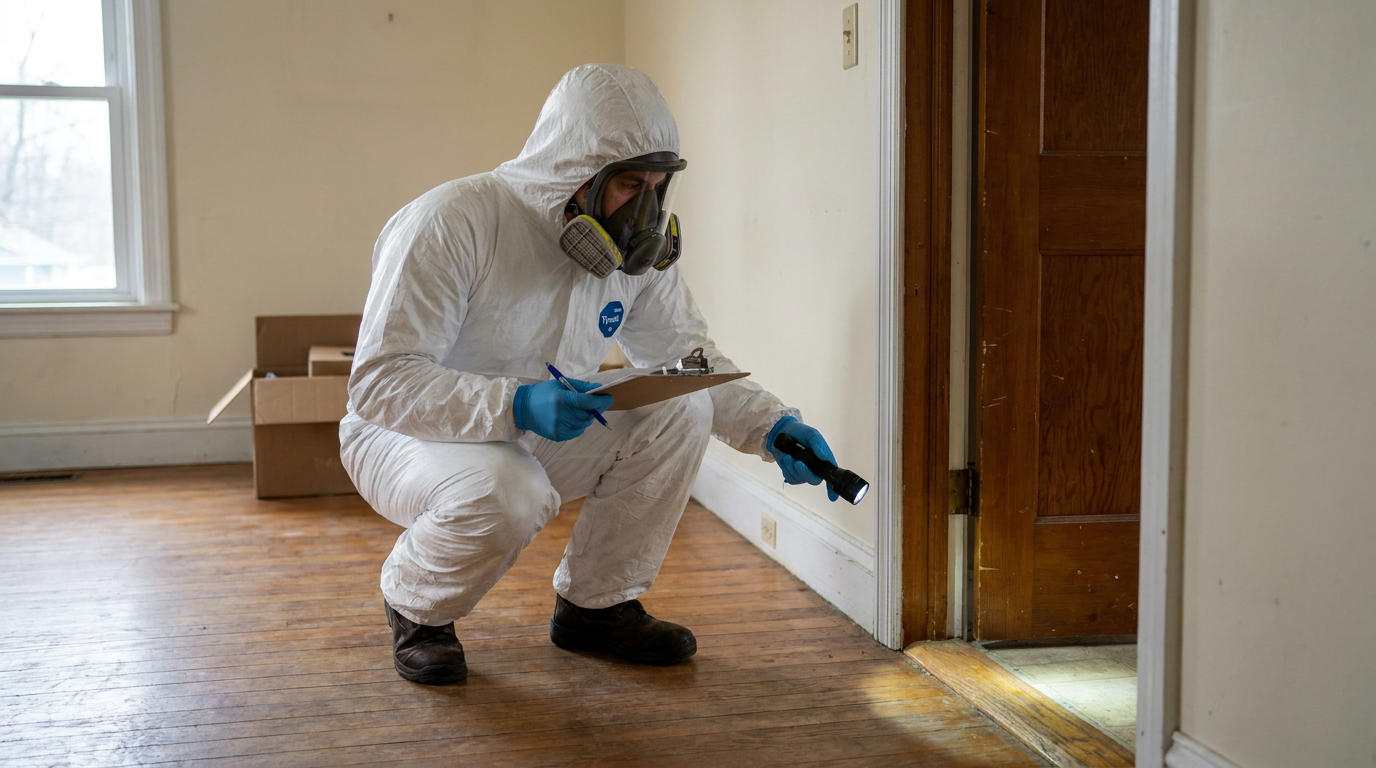
If you are reading this, you may have just discovered a loved one or been asked to make decisions about a property under circumstances no one ever expects to face. This article is written plainly and practically — not to alarm you, but to give you honest information so you can make the best possible decision with the time you have. You do not have to handle any of this alone.
Property owners and families dealing with the aftermath of an unattended death ask us the same question almost every time: how much time do we have? They are trying to understand whether they can wait a day, a week, or longer before calling for professional help. The honest answer is not the one most people expect.
Decomposition begins affecting a property within hours of death — not days. In warm or enclosed conditions, the process accelerates dramatically. By the time most families discover the situation, biological contamination has already penetrated materials that cannot simply be cleaned. What can be remediated quickly and at a fraction of the cost becomes a significantly larger structural problem with each passing day.
Understanding this timeline does not mean there is urgency to panic. It means there is urgency to call a certified professional as soon as possible — because the difference between a $4,000 job and a $15,000 job is often measured in days, not months.
The Decomposition Timeline: What Happens to a Property and When
Human decomposition follows predictable biological stages. What follows is a practical timeline focused on what those stages mean for the structure of a home or rental unit — the materials that get damaged, the systems that get contaminated, and the remediation complexity that accumulates at each stage.
Fluid release begins
Bodily fluids begin releasing almost immediately after death. Depending on ambient temperature and the position of the body, blood and other biological fluids will begin saturating whatever surface is in direct contact — carpet, hardwood, concrete, upholstery, or bedding.
At this stage, the contamination is largely surface-level. Porous materials like carpet and padding have absorbed fluid, but if the underlying subfloor is intact and the air conditioning is running, penetration into structural materials may still be limited.
This is the earliest and most cost-effective window for professional intervention. Surface materials can often be removed without affecting the subfloor. Odor is present but has not yet circulated through the HVAC system.
Subfloor and wall penetration begins
By day two or three, fluids that saturated carpet and padding have typically begun wicking into the subfloor below. If the flooring is hardwood, fluid has penetrated the grain and the boards are now contaminated throughout — not just on the surface.
Drywall in contact with or near the body may begin showing fluid absorption at baseboard level. In warm conditions — anything above 65°F — decomposition gases begin producing noticeable, persistent odor that starts settling into other porous surfaces in the room: upholstered furniture, curtains, insulation behind walls.
Remediation at this stage nearly always requires subfloor treatment and sometimes limited subfloor removal. Cost is meaningfully higher than at the 24-hour mark but still manageable compared to what follows.
Structural penetration and HVAC contamination
At this point, biological fluids have typically penetrated through the subfloor into floor joists and the structural framing below. In homes with crawl spaces, contamination can reach insulation and structural elements beneath the floor. If the property is not air-conditioned or the system has been running continuously, gases and odor particles are now circulating through HVAC ducts and settling throughout the home — often in rooms that were never directly affected.
Drywall penetration is common in this window. Fluids that traveled under baseboards or seeped into wall cavities are now contaminating insulation. The scope of removal expands significantly: subfloor sections, drywall panels, and potentially insulation all require remediation.
This is also the window where insect activity typically begins, which introduces additional biological contamination beyond the original fluids. Professional HVAC decontamination becomes essential rather than optional at this stage.
Widespread structural impact
Extended exposure — anything beyond one week — typically means structural framing has been affected. Floor joists, sill plates, and wall studs in direct contact with saturated materials will show biological contamination that cannot be remediated by surface treatment alone. Affected framing must be assessed, treated, and in many cases partially replaced.
HVAC contamination at this stage extends beyond the room of origin. Odor-causing compounds have settled into ductwork throughout the structure and may require full duct cleaning and sanitization. Air scrubbing alone will not eliminate the odor source.
Remediation at the one-to-four week mark is classified as a major structural job. Typical costs run $10,000 to $25,000 and above, depending on the size of the structure and the extent of fluid migration. Mold growth — which is common in contaminated structural cavities — adds additional scope.
Major structural remediation required
Prolonged undiscovered deaths — particularly those involving warm conditions or compromised HVAC — can result in contamination that requires partial structural demolition. Subfloor sections, wall cavities, and in severe cases ceiling materials must be removed. The structure must be fully assessed before any restoration work begins.
While even these situations are resolvable with certified biohazard remediation, they require significantly more time, more materials removed, and more restoration work afterward. The cost of returning the property to a safe, habitable condition at this stage is substantially higher than if the situation had been addressed within the first 24 to 72 hours.
How North Country NY Climate Affects the Timeline
Temperature is the single most important variable in how fast decomposition progresses through a property. The decomposition process — and the fluid migration that damages structural materials — accelerates significantly with heat.
North Country New York presents a climate that creates two distinct risk profiles:
Summer (May–September)
Interior temperatures in unoccupied or un-air-conditioned homes can reach 80–90°F or higher. At these temperatures, decomposition progresses at a dramatically accelerated rate — what might take a week in cooler conditions can occur in 2–3 days.
A home discovered with a non-functioning HVAC system in July or August is among the most time-sensitive situations we respond to. Every hour matters at ambient temperatures above 75°F.
Winter (October–April)
Cold temperatures slow the decomposition process considerably. An unoccupied home in January with the heat off may preserve conditions for days longer than a warm-weather equivalent. This leads many families to assume they have more time than they do.
The risk: when heating is restored to the property, decomposition resumes rapidly. A cold, preserved environment can become a severe biohazard in hours once interior temperature rises. Do not restore heat to a property before professional assessment.
Humidity also plays a role — high humidity accelerates both decomposition and mold growth in affected structural cavities. North Country's humid summers mean that properties with decomposition contamination in wall cavities or subfloor spaces can develop secondary mold problems rapidly, adding scope to what might otherwise be a contained remediation job.
What Decomposition Fluids Actually Do to Building Materials
Understanding why decomposition cleanup is more complex than surface cleaning requires understanding what these fluids do to common building materials at a physical and chemical level.
Carpet and carpet padding
Typically non-salvageableCarpet is porous and highly absorbent. Even small volumes of biological fluid penetrate through the carpet fiber and saturate the padding beneath within hours. The padding acts as a reservoir, holding fluid against the subfloor surface indefinitely. Carpet and padding in the affected area are almost always non-salvageable and must be removed and disposed of as regulated biohazardous waste.
Subfloor (plywood or OSB)
Typically non-salvageableStandard OSB and plywood subfloor is moderately absorbent. Under sustained exposure from saturated padding, biological fluids penetrate into the wood fibers and cannot be removed by surface cleaning or disinfection alone. Affected subfloor sections typically require removal. The extent of removal depends on how far fluid has migrated — which is assessed during remediation by visual inspection and moisture measurement.
Hardwood flooring
Typically non-salvageableFinished hardwood is less immediately absorbent than carpet, but biological fluids that penetrate the finish or enter through gaps between boards contaminate the wood throughout. The finish seals the contamination in. Affected hardwood boards are typically not salvageable and must be removed.
Concrete (sealed)
May be salvageableSealed concrete is the most favorable surface for remediation. Biological fluids rest on the surface and can be removed with EPA-registered disinfectants before significant penetration occurs — provided the contamination is addressed while the seal is intact. Unsealed or aged concrete is porous and absorbs fluid readily.
Drywall
Typically non-salvageableDrywall is highly porous. Biological fluids that contact drywall — whether through direct exposure, fluid migration under baseboards, or penetration from below — are absorbed into the gypsum and paper facing. Odor compounds embed in drywall deeply and cannot be neutralized without removal. Affected drywall panels must be cut out and replaced.
HVAC ductwork
May be salvageableHVAC systems that operated during or after decomposition have circulated decomposition gases and, in some cases, airborne biological particulates throughout the structure. Odor compounds settle into duct lining and spread to every room served by the system. HVAC decontamination — including duct cleaning and treatment of the air handler — is required on any job where the system ran during the contamination period.
Structural framing (joists, studs)
May be salvageableWood framing in direct contact with contaminated subfloor or drywall absorbs biological fluids over time. In extended exposure situations, framing may require encapsulation with antimicrobial sealant or, in severe cases, partial replacement. This is the primary driver of cost escalation in delayed remediation scenarios.
What You Should NOT Do Before Professionals Arrive
When families discover an unattended death, well-intentioned steps taken before professional remediation can make the situation significantly worse. These are the most common mistakes — and why each one causes problems.
Do not: Opening windows or running fans
Ventilation moves decomposition gases through the property and into neighboring spaces, spreading odor compounds that then settle into other porous materials throughout the home. It does not remove the contamination — it redistributes it. A room that could have been contained may now require whole-house odor treatment.
Do not: Running the HVAC system
If the system has not already been running, turning it on forces decomposition gases through every duct in the structure. This is one of the most significant scope-expansion errors we see — it turns a one-room remediation job into a full-structure HVAC decontamination.
Do not: Attempting surface cleaning
Household cleaners and bleach do not neutralize bloodborne pathogens or decomposition fluids in porous materials. Surface cleaning can spread contamination to previously unaffected surfaces and disturbs the condition of the scene in ways that complicate professional remediation. It also does not address what has already penetrated below the surface.
Do not: Removing or moving contaminated items
Moving saturated carpet, furniture, or bedding without proper biohazard containment spreads contamination to flooring, hallways, and other areas the items pass through. Items that could have been disposed of in place now contaminate the entire removal path.
Do not: Restoring heat to a cold property
In winter situations, a cold property may appear to have limited decomposition progression. Restoring heat before a professional assessment causes rapid resumption of decomposition and can turn a contained situation into a severe one within hours.
The correct action is to leave the space as it is — keep the door closed, keep the HVAC in its current state, and call a certified biohazard remediation company immediately. We will assess the situation before recommending any action.
What Professional Decomposition Remediation Involves
Certified biohazard remediation for decomposition is a structured process that addresses contamination at every level — surface, structural, and airborne. Here is what it involves from start to finish.
Scene assessment and scope documentation
Before any removal or treatment, we document the full extent of contamination — visually and with moisture meters to detect subfloor and wall penetration not visible to the eye. This assessment determines the scope of removal, the cost, and the documentation needed for insurance.
Containment setup
Affected areas are contained using plastic sheeting and negative air pressure to prevent contamination from spreading to unaffected areas of the structure during remediation. HEPA air scrubbers run continuously during the job.
Removal of contaminated porous materials
Carpet, padding, affected subfloor sections, drywall panels, and insulation are removed, packaged in sealed biohazard containers, and transported to a licensed disposal facility. Materials are disposed of as regulated biohazardous waste — not in standard trash.
EPA-registered disinfection
All remaining structural surfaces — exposed subfloor framing, concrete, sealed walls — are treated with EPA-registered disinfectants rated for bloodborne pathogens and decomposition fluids. Enzymatic agents break down biological material at a molecular level. Multiple applications are standard for extended exposure situations.
Structural sealing
Exposed framing and any structural surfaces with absorbed odor compounds are sealed with antimicrobial encapsulant to prevent residual odor release after the space is enclosed during reconstruction.
Ozone and HEPA treatment
Commercial ozone generators treat the affected space and, when indicated, the HVAC system to neutralize residual airborne odor molecules. Industrial HEPA scrubbers run for the duration of the job to capture airborne biological particulates. This is not optional — ozone treatment is the only reliable way to eliminate biological odor that has settled into structural materials.
Clearance documentation
On completion, we provide a full chain-of-custody record, before-and-after photographs, waste disposal manifests, and a clearance certificate documenting that the space has been returned to safe condition. This package is what your insurance adjuster needs to close the claim and what a reconstruction contractor needs before beginning restoration work.
The Real Cost of Delay: What the Numbers Look Like
The cost difference between early and delayed remediation is the most concrete way to understand why timeline matters. These are representative ranges for North Country New York, based on actual job scope at each stage of discovery.
| Time Since Death | Typical Scope | Cost Range |
|---|---|---|
| Within 24 hours | Surface removal (carpet/pad), disinfection, HEPA/ozone treatment | $3,000 – $6,000 |
| 1–3 days | As above + subfloor treatment, possible limited subfloor removal | $5,000 – $9,000 |
| 3–7 days | Subfloor removal, drywall panels, HVAC decontamination | $7,000 – $14,000 |
| 1–4 weeks | Structural framing treatment, extensive drywall, full HVAC, encapsulation | $10,000 – $22,000 |
| 4+ weeks / severe | Partial structural demolition, full HVAC, mold remediation likely needed | $15,000 – $30,000+ |
Ranges reflect IICRC-certified biohazard remediation including biohazard waste disposal, disinfection, and ozone/HEPA treatment. Structural reconstruction billed separately. Ranges assume a standard single-room primary contamination area.
The pattern is consistent: each additional day of untreated decomposition in a warm environment adds scope that costs more than the entire job would have cost at the 24-hour mark. This is not a sales pitch — it is the structural reality of how biological fluids migrate through building materials. Acting quickly is, without exception, cheaper than waiting.
Insurance Coverage for Decomposition Cleanup
Many families assume that decomposition cleanup is not covered by homeowner's insurance. Many of them are wrong. Whether coverage applies depends on the specifics of your policy and the circumstances, but here is the general picture:
- ✓Standard homeowner's policies often include biohazard remediation coverage as part of dwelling coverage when an unattended death constitutes a covered loss on the property.
- ✓Landlord and dwelling fire policies typically cover tenant-related unattended death cleanup as part of property damage coverage.
- ✓HVAC decontamination required as a result of a covered event is generally considered part of the remediation scope — not a separate uncovered line item.
- ✓Mold discovered during remediation may be covered if it originated from the same covered event, though this varies significantly by carrier.
- ✓Do not assume a denial before calling. Many families pay out of pocket for jobs that their policies would have covered, simply because they never filed a claim.
We provide the complete documentation package that insurance adjusters require: before-and-after photographs, a line-item scope of work, biohazard disposal manifests, and clearance certification. We work directly with your adjuster so that you do not have to manage the claim while navigating a difficult situation. For a detailed walkthrough of how insurance billing works, our biohazard cleanup cost guide covers the full process step by step.
Frequently Asked Questions
Is the smell permanent if decomposition went on for a long time?
No — even severe biological odor is eliminable with proper source removal and treatment. The key is that odor cannot be masked or neutralized while the biological source remains in the structure. Once contaminated materials are removed and structural surfaces are treated and sealed, ozone and HEPA treatment eliminates residual airborne odor compounds. Properties that have been professionally remediated after extended decomposition are successfully returned to habitable condition.
Should I air out the property before calling?
No. Opening windows and running fans redistributes decomposition gases through the property and into neighboring areas, spreading odor compounds that then settle into unaffected porous materials. Leave the space as it is — keep the door closed — and call us before taking any other action. We will assess the situation before recommending any ventilation or treatment.
Does the whole house need to be remediated, or just the room where the death occurred?
It depends on how long the HVAC system was running during the contamination period. If the system circulated air while decomposition was in progress, gases traveled through every duct in the structure and may have settled into other rooms. We assess this during our initial evaluation. In many cases, the primary contamination is confined to the room and adjacent surfaces, and full-house remediation is not required — but HVAC decontamination often is.
Can I clean it myself with bleach or commercial cleaners?
No — household cleaners including bleach do not neutralize the bloodborne pathogens and decomposition compounds present in biological contamination. They also do not penetrate porous materials. Attempting to clean the area yourself without proper PPE also creates direct exposure to pathogens that carry serious health risks. Beyond the safety issue, DIY attempts that disturb the scene can complicate professional remediation and may affect insurance claim documentation.
How quickly can you respond in North Country NY?
We respond to calls 24 hours a day, 7 days a week, including weekends and holidays. For emergency situations, we can typically be on-site within 24 hours across all six North Country counties — St. Lawrence, Franklin, Clinton, Essex, Lewis, and Jefferson. Remote areas may take slightly longer, but we always communicate a clear arrival window when you call.
What if I discovered the property and it's a rental unit — am I responsible for the cleanup?
Landlords and property managers are responsible for ensuring rental units are returned to habitable condition. Cleanup costs typically fall to the landlord's or property owner's insurance. We work frequently with property managers and can set up a streamlined intake process for landlords who may encounter this situation more than once. For a detailed guide on what property managers need to know, see our article on biohazard cleanup for rental properties.
About Post Trauma Scene Decon
Post Trauma Scene Decon is an SDVOB-certified and IICRC-certified biohazard and trauma remediation company in Northern New York, founded and led by a service-disabled veteran and former police officer and crime scene technician. Owner James has over 20 years of experience working death scenes as a law enforcement officer — which means he understands what families are going through and how to handle every situation with the discretion it requires. We hold IICRC certification, OSHA compliance, NYS DOL and DEC certification, BBB accreditation, SDVOB and HUBZone certification, and are the 2025 BBB Torch Award winners for Ethics. We serve all six North Country counties 24 hours a day, 7 days a week.
When you call, have this ready:
- Property address and your relationship to the property
- Approximate date of death (if known) or date the property was last occupied
- Current condition of the HVAC system — running or off
- Approximate room size and flooring type in the affected area
- Your insurance carrier and policy number, if applicable
"In twenty years of working death scenes, the one thing I tell every family is this: the sooner you make the call, the more options you have. Not just financially — emotionally. Every day that passes is another day the situation isn't resolved. We are here to take that off your shoulders so you can focus on what matters." — James, Founder
Post Trauma Scene Decon provides biohazard cleanup, unattended death remediation, and trauma scene restoration across St. Lawrence, Franklin, Clinton, Essex, Lewis, and Jefferson counties in Northern New York. IICRC certified. OSHA compliant. BBB accredited. SDVOB and HUBZone certified. 2025 BBB Torch Award for Ethics. Free on-site assessments. Available 24/7.
Don't Wait — Every Hour Matters
If you have discovered a decomposition scene, call us now before taking any other action. We will assess the situation, explain your options, and handle everything — including insurance documentation — so you don't have to. Serving all of North Country NY.
Call (315) 250-4462