
If it just happened: get people out of the affected area, stop using water in the building, and photograph everything before anything is moved. Then call a plumber for the source and us for the contamination. We answer 24/7.
If you own or manage rental housing or commercial space in northern New York, you will probably deal with a sewage backup at some point. The buildings are often decades old, the winters are hard on plumbing, and a problem in one unit can reach several others before anyone notices. How quickly and how well you respond affects your tenants' health, your insurance claim, and how soon the space can be used again.
We have a general guide to sewage backup cleanup, health risks, and what to do. This article is written for owners, landlords, property managers, and business operators, and it focuses on the situations you face: tenants, multiple units, documentation, and liability. If you manage property in this region, you may also want our guide for property managers on biohazard cleanup.
Why Sewage Is Treated as a Biohazard
Water from a sewage backup is classed in the restoration industry as Category 3, often called black water. That means it is grossly contaminated and can contain pathogens that make people sick. The IICRC, which publishes the standards our industry follows, describes categories of water by how contaminated they are, and Category 3 calls for removal of porous materials that absorbed it rather than attempts to save them. You can learn about those standards at iicrc.org.
The practical point for an owner is that contamination does not stay where you can see it. Water wicks up drywall, soaks insulation inside wall cavities, and runs under flooring. A floor that looks dry after a few days can still be holding contaminated material beneath it. Because the water has been in contact with waste, anything porous it touched is suspect, and the longer it sits the more it spreads.
Why Backups Happen Here
Northern New York has its own causes. These are the ones we see most in the region's rental and commercial buildings.
Frozen and split lines
Cold snaps freeze older lines and crawlspace piping. A split line can go unnoticed until it thaws, and then waste water has nowhere to go but into the building.
Spring thaw and heavy rain
Saturated ground and overloaded municipal systems push water back through floor drains and low fixtures, especially in basement units.
Tree roots and aging pipe
Many North Country buildings have older clay or cast iron service lines. Roots and broken joints narrow the line until it clogs.
Grease, wipes, and foreign objects
In multi-unit buildings, one tenant's flushed wipes or kitchen grease can back up every unit below.
Municipal main problems
Sometimes the blockage is in the street, not the building. Ask the village or city whether other properties on the block are affected.
Winter adds a second problem. When a line freezes or splits and then thaws, the damage may not show until water starts moving again, often during a warm spell or spring melt. A unit that was vacant or lightly used over winter can sit contaminated for days before anyone walks in. If you manage seasonal or vacant property, regular checks after cold snaps are worth the time.
What to Do in the First Hours
The first decisions are the ones owners most often get wrong because they are stressed and want the problem gone. This order protects people and protects your claim.
Evacuate and restrict access
Move tenants, staff, and pets out of affected areas and keep people from walking through the water. Shut off power to a flooded area only if you can do so safely; otherwise leave it to an electrician.
Stop the source if you can
Stop using water in the building and have a plumber clear or repair the line. Remediation cannot be finished while the line is still backing up.
Document before anything moves
Photograph and video every affected room, the water line on walls, damaged contents, and the fixtures involved. Insurers ask for this first.
Notify your insurer and tenants
Open a claim early and give affected tenants written notice of what happened and what to expect. Keep copies.
Call a certified remediation company
Sewage is not a mop-and-bucket job. Waiting lets the contamination soak deeper into drywall, flooring, and insulation.
Do not send staff or maintenance workers in to mop it up, run household fans through the space, or use a shop vacuum. Those actions put people at risk and can spread contamination to clean areas.
Tenants, Customers, and Your Responsibilities
Once people have been moved out of harm's way, the next question is communication. Tenants and customers want to know what happened, whether it is safe, and when things will return to normal. Clear, honest, written notice reduces conflict and creates a record.
- •Tell affected tenants what happened, which areas are off limits, and who to contact.
- •Give a realistic timeline, and update it when it changes.
- •Keep a log of calls, notices, and decisions with dates.
- •Ask your attorney or insurer about tenant displacement, rent, and any obligations under your lease or local housing rules. These vary, and we cannot give legal advice.
- •For commercial space, tell the business owner early so they can plan around closed areas.
Habitability matters here. A living space with raw sewage contamination is not safe to occupy, and neither is a business area with it. Moving fast to clean and clear the space is usually in everyone's interest, including yours.
How Professional Sewage Cleanup Works
A proper sewage cleanup follows a sequence designed to remove contamination rather than cover it. For rental and commercial properties, we also build the paper trail you will need.
Assess the extent of contamination
We map where the water went, measure affected areas, and photograph everything. Water that touched sewage is treated as contaminated all the way to its edge.
Contain the area
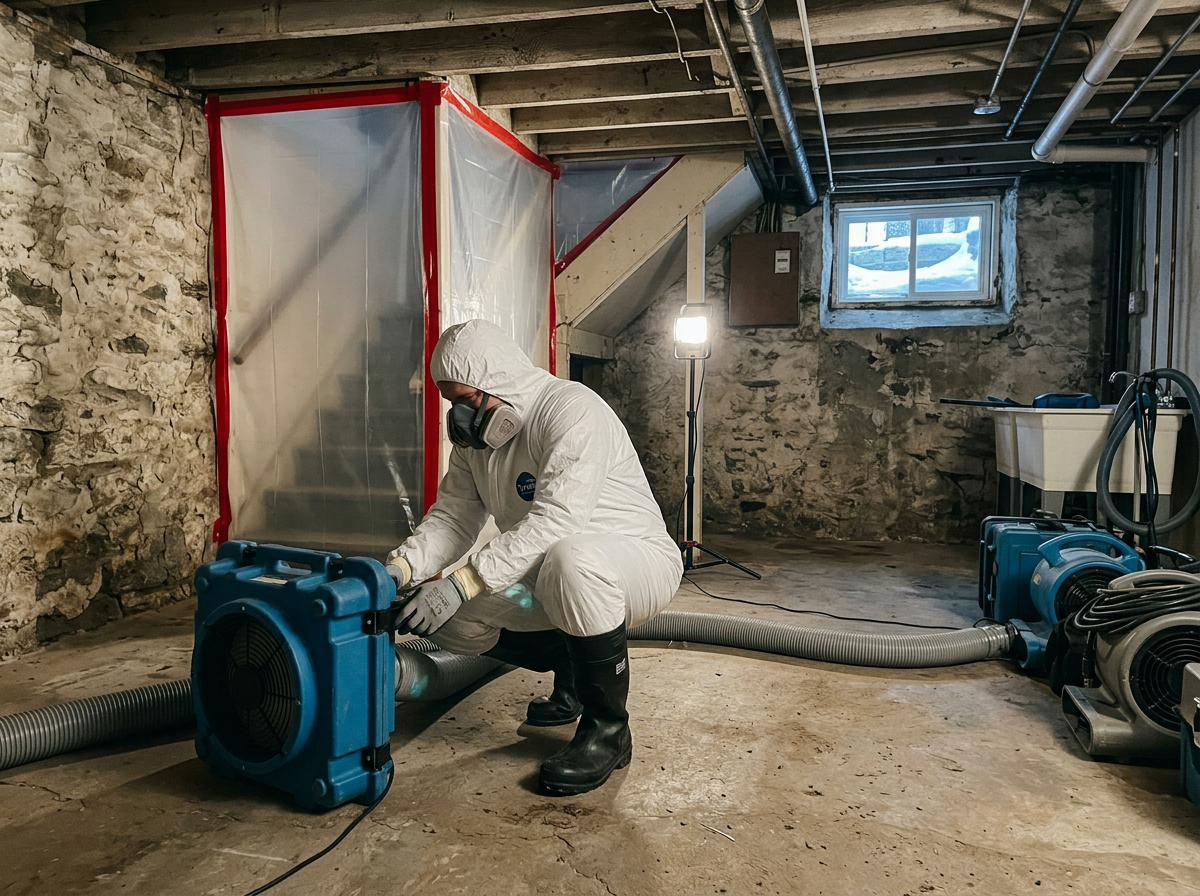
We isolate the affected space with containment and run HEPA filtration so contaminated air and dust do not travel into clean units.
Remove contaminated materials
Porous materials that absorbed sewage, such as carpet, pad, insulation, and often drywall, are removed and bagged for proper disposal. They cannot be reliably cleaned.
Clean and disinfect
Remaining structure is cleaned and treated with EPA-registered disinfectants. Hard surfaces and framing can often be saved.
Dry the structure
Moisture left behind feeds mold. Drying equipment and moisture readings confirm the structure is dry before anything is rebuilt.
Treat odor
When odor remains after the source is removed, we use ozone or hydroxyl treatment with HEPA filtration, with the space vacated for ozone.
Document and hand off
You receive photos, a written scope, and notes on any structural damage so your plumber, insurer, and rebuild contractor have what they need.
Workers wear protective suits, respirators, gloves, and boot covers, and equipment is decontaminated before it leaves. Regulated waste is packaged and disposed of through the proper channels. OSHA's bloodborne pathogens guidance is the starting point for how workers should be protected around biological hazards, and it is the standard we train to.
Mold, Odor, and What Comes After
Two problems commonly follow a sewage backup if cleanup is slow or incomplete: mold and odor. Moisture trapped behind baseboards or in a wall cavity gives mold what it needs to grow within days, and sewage odor can linger in porous materials long after the visible mess is gone. The EPA's guidance on mold and moisture makes the same point: moisture control is the key, and wet materials that cannot be dried quickly are better replaced.
That is why we verify that the structure is dry and treat odor before we call a job finished. If mold does appear, our mold remediation service covers it. For odors that stay after cleaning, see how professional odor removal works.
We stop at the point where rebuilding starts. Replacement of drywall, flooring, and fixtures is done by other trades, and we tell you what we found so they can price it. We also flag anything that looks structural. If you want a sense of how a typical biohazard job unfolds, read how long professional biohazard cleanup takes.
Special Considerations for Commercial Space
A sewage backup in a business is different from one in a home, because the cost is not only the cleanup. Every day a space is closed is lost revenue, and some businesses face additional rules that a homeowner does not.
Food service and retail
Restaurants, cafes, and stores that handle food or sell to the public may need the space cleared and cleaned to a higher standard before reopening. Ask your local health department what they require, and keep our clearance documentation handy.
Offices and shared buildings
A backup in a shared building can affect several tenants and common areas at once. Coordinate with the building owner and the other tenants so there is one plan, not several.
Inventory and equipment
Stock, files, and electronics on the floor are often the most valuable things affected. Photograph them before they are moved and ask your insurer what documentation they require for contents.
Staff and customers
Keep people out of the affected area and give staff clear instructions. Anyone who comes into contact with the water should wash thoroughly and seek medical advice if they feel unwell.
Speed matters most here. A faster, well-documented cleanup shortens the closure and gives you the paperwork to support any business-interruption claim you may have. Tell us at the first call that the space is commercial and when you need to reopen, and we will plan the work around that.
Preventing the Next Backup
You cannot prevent every backup, but owners who take a few simple steps often avoid the worst of them. None of these replaces a plumber's advice, but they are practical habits for older North Country buildings.
- •Have main sewer lines inspected, with a camera if needed, especially in buildings with older clay or cast iron pipe or mature trees nearby.
- •Schedule periodic cleaning of lines that serve kitchens and multi-unit buildings, where grease and wipes build up.
- •Tell tenants in writing what should not be flushed or poured down drains.
- •Keep vacant and seasonal units heated enough to protect plumbing, and check them after cold snaps.
- •Ask your plumber about a backwater valve if your building has floor drains or fixtures below the street line.
- •Know where your main water shutoff is, and make sure staff and maintenance know too.
- •Review your insurance for sewer and drain backup coverage before you need it.
These steps cost far less than a contaminated building. Even so, if a backup does happen, the best thing you can do is act quickly, document everything, and bring in a company that is equipped to handle biological hazards safely.
What a Written Estimate Should Include
Before work starts, you should receive a written scope that you can show your insurer. Whoever you hire, look for these items:
- •Which rooms and materials are included, with measurements
- •What will be removed and what will be cleaned and kept
- •How contaminated waste will be handled and disposed of
- •Drying, disinfection, and odor treatment steps
- •How hidden damage found during removal will be handled and approved
- •What is excluded, such as rebuilding, plumbing repair, and contents restoration
- •Payment terms and how insurance billing works
If a contractor will not put the scope in writing, or gives a firm price without seeing the property, treat that as a warning. We assess on site, photograph and measure, and provide a written estimate before the work begins.
Insurance and Documentation for Owners
Sewer and drain backup coverage is often a separate endorsement on a property policy rather than something included by default. That makes it worth reading your policy now, before something happens. If you have a claim, these are the documents that tend to matter:
- •Date and time you discovered the backup, and what you did next
- •Plumber's invoice or report identifying the cause
- •Photos and video of conditions before cleanup
- •A written scope of the remediation work with measurements
- •Photos of the finished work and disposal records
- •Notices and communications with tenants or customers
We provide the photos, measurements, and written scope as part of the job and work directly with your adjuster. Insurance claims in our region often take several weeks to approve, particularly with out-of-area adjusters, so talk to us about timing if the space cannot sit contaminated while you wait. For a fuller look at costs and billing, see biohazard cleanup cost and how insurance billing works.
Choosing a Company for Rental and Commercial Jobs
- Certification and training. IICRC-trained technicians and OSHA-compliant practices for biological hazards.
- Proper disposal. Ask how contaminated materials are packaged, transported, and disposed of, and whether you will get documentation.
- Speed and local presence. A local crew can reach a North Country property within the day. National dispatchers often cannot.
- Documentation. Photos, measurements, and a written scope for your insurer and records.
- Discretion. Especially for commercial space and occupied buildings, a company that works quietly protects your reputation.
Who We Are
Post Trauma Scene Decon is led by James Smith, a service-disabled veteran, former police officer, and crime scene technician with more than 20 years of experience. We are IICRC certified, OSHA compliant, and BBB accredited, and we hold SDVOB and HUBZone certifications. We work with property managers, housing authorities, and municipalities across St. Lawrence, Franklin, Clinton, Essex, Lewis, and Jefferson counties, including Malone, Plattsburgh, Watertown, Massena, Potsdam, and Canton. Insurance and government clients pay after the job is complete, and private clients pay half to schedule.
We know the people in these buildings did not choose this, and we try to make the next few days as manageable as we can. You can read more about our biohazard cleanup service.
Frequently Asked Questions
Is sewage backup a biohazard?
Yes. Sewage can carry bacteria, viruses, and parasites. Cleanup is treated as biohazard work, which is why protective equipment, containment, and proper disposal matter.
Who is responsible for cleanup, the landlord or the tenant?
It depends on the cause, your lease, and local rules. In general, the building owner is responsible for the building's systems and habitable conditions. We are not lawyers, so check your lease and speak with an attorney if responsibility is disputed. We document the cause and extent, which helps either way.
Will insurance cover it?
Often it depends on whether your policy includes sewer or drain backup coverage, which is frequently a separate endorsement. Check your policy and call your agent early. We provide the photos and written scope adjusters ask for.
Can tenants stay in the building?
Not in affected areas, and sometimes not in the unit until it is cleared. Keep people away from contaminated spaces and talk to us about when it is safe to return.
How fast should I call?
As soon as the source is stopped or while it is being stopped. Contamination soaks deeper over time, which increases removal and cost. We respond 24/7.
How long does cleanup take?
A single room or basement can often be done in a day, while larger or multi-unit jobs take longer, including drying time. We give a timeline after we see the property.
Can I just use bleach and a wet vac?
No. Household methods do not reach contamination inside porous materials, and shop vacuums can aerosolize it. Bleach also does not make soaked materials safe to keep.
Post Trauma Scene Decon provides sewage backup cleanup, biohazard remediation, mold remediation, and odor removal across St. Lawrence, Franklin, Clinton, Essex, Lewis, and Jefferson counties in Northern New York. IICRC certified. OSHA compliant. BBB accredited. SDVOB and HUBZone certified. Available 24/7.
Sewage Backup at Your Property? Call Now.
We will assess the property, document it for your insurer, and get it cleaned and cleared. Available 24/7 across North Country NY.
Call (315) 250-4462