Whole-House Mold Remediation
St. Lawrence County, NY
A long-term roof breach allowed water intrusion throughout a residence in St. Lawrence County, resulting in mold colonization across five rooms. Referred by government emergency services. Remediated in four days. Funded through a disaster grant.
5
Rooms Remediated
4
Days On-Site
Roof
Moisture Source
Grant
Disaster Funding
How the Job Came In
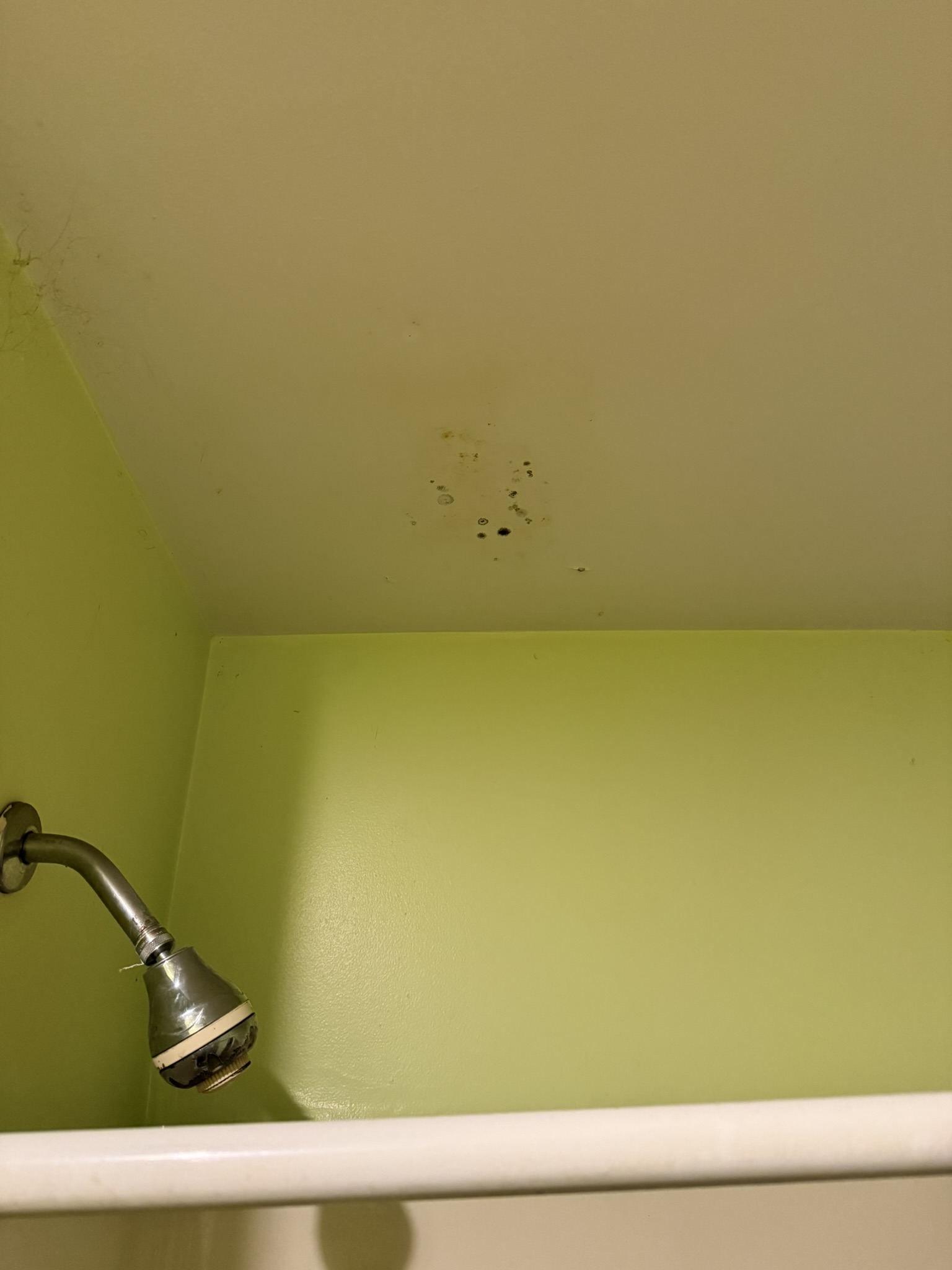
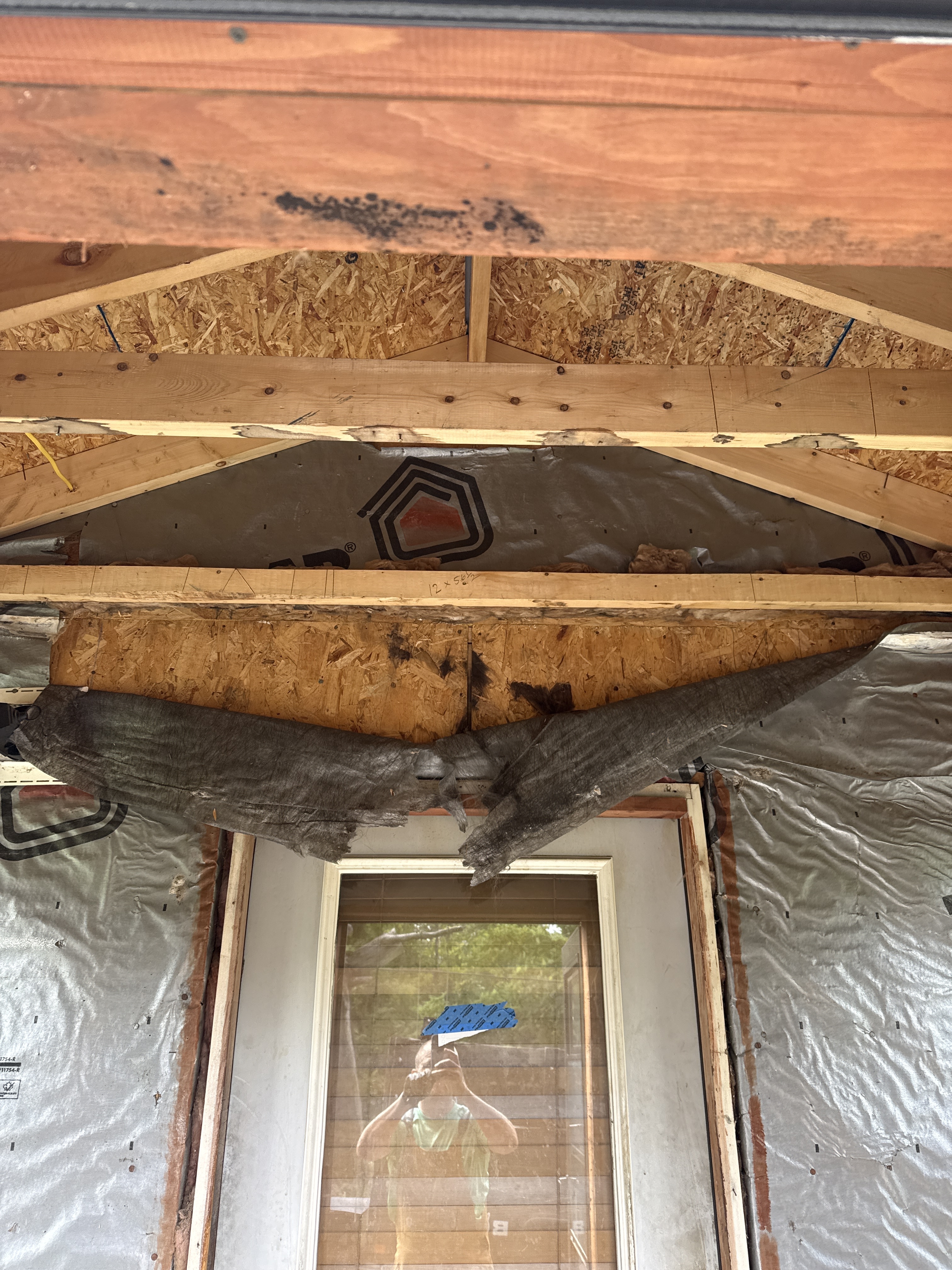
Post Trauma Scene Decon was contacted by a government emergency services agency regarding a residential property in St. Lawrence County. The property had sustained a roof breach that had gone unaddressed long enough for water intrusion to affect multiple areas of the structure. By the time emergency services escalated the situation, mold had become extensive — visible across five rooms and, as our inspection would confirm, penetrating behind walls and into structural cavities throughout.
The property was occupied. The residents were living with visible mold growth on walls and ceilings in the rooms where they spent the most time, including the bathroom and at least one bedroom. Funding for the remediation was arranged through a disaster grant — there was no insurance involvement.
What We Found on Arrival
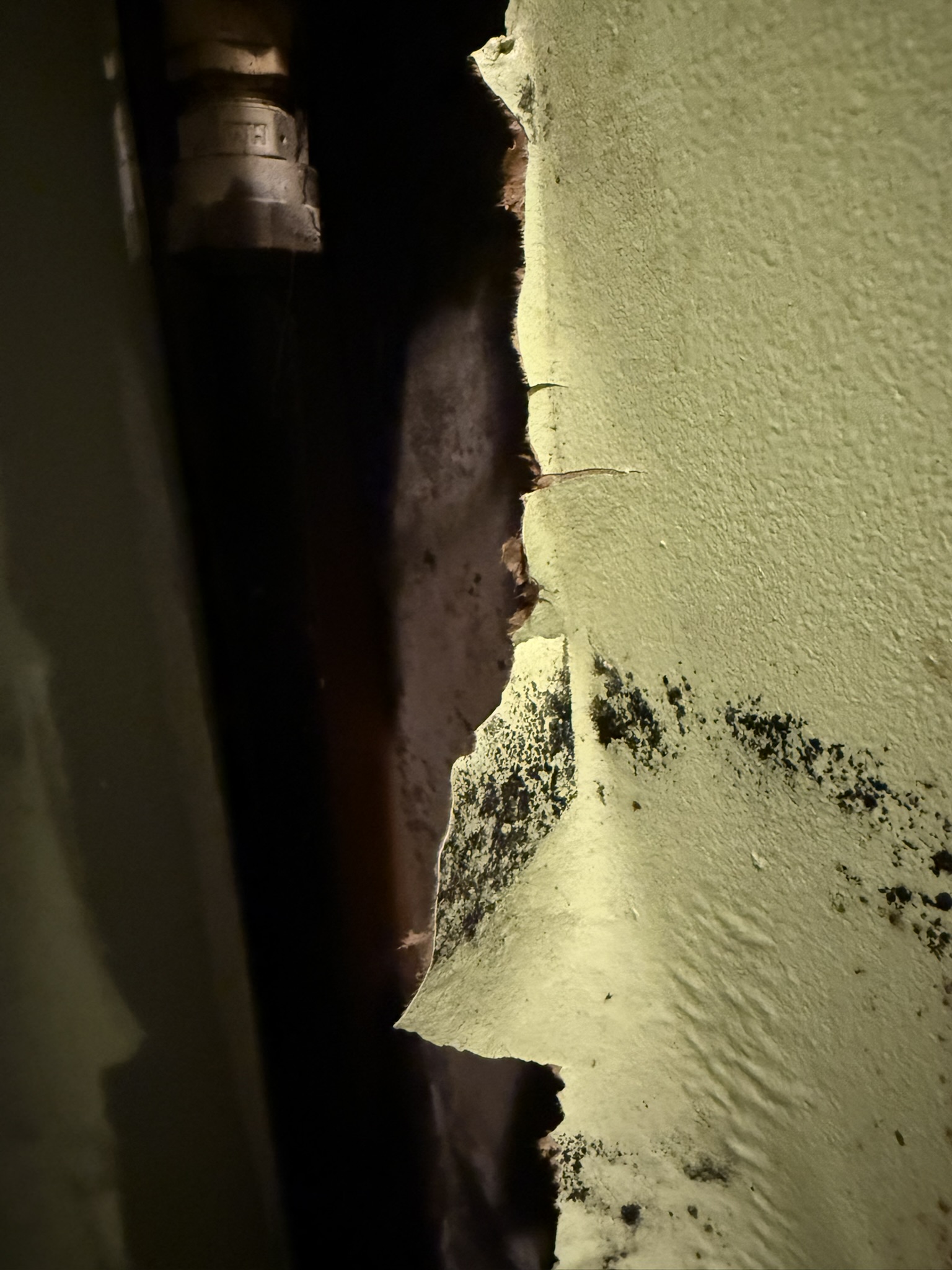
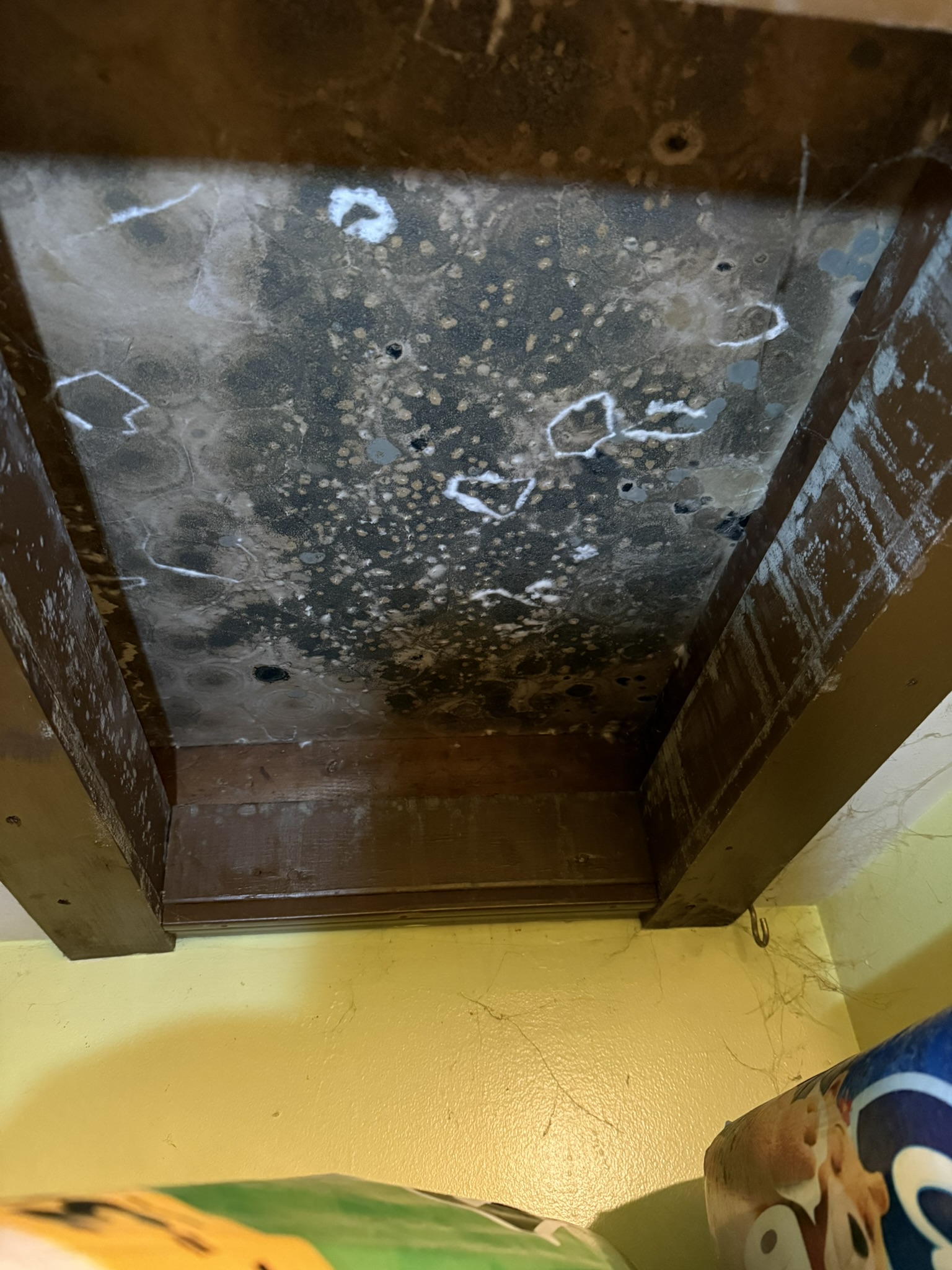
Scope of Contamination
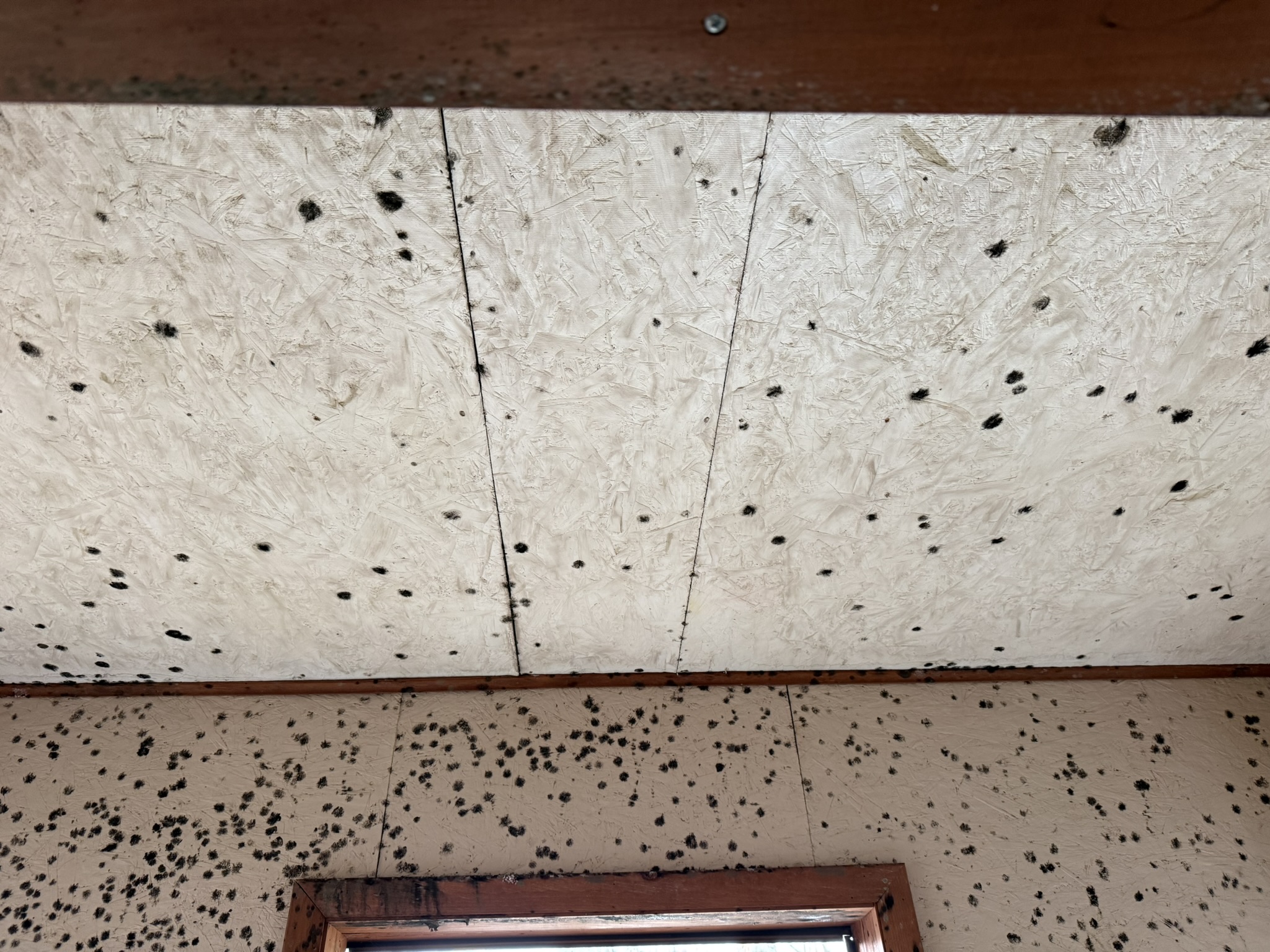
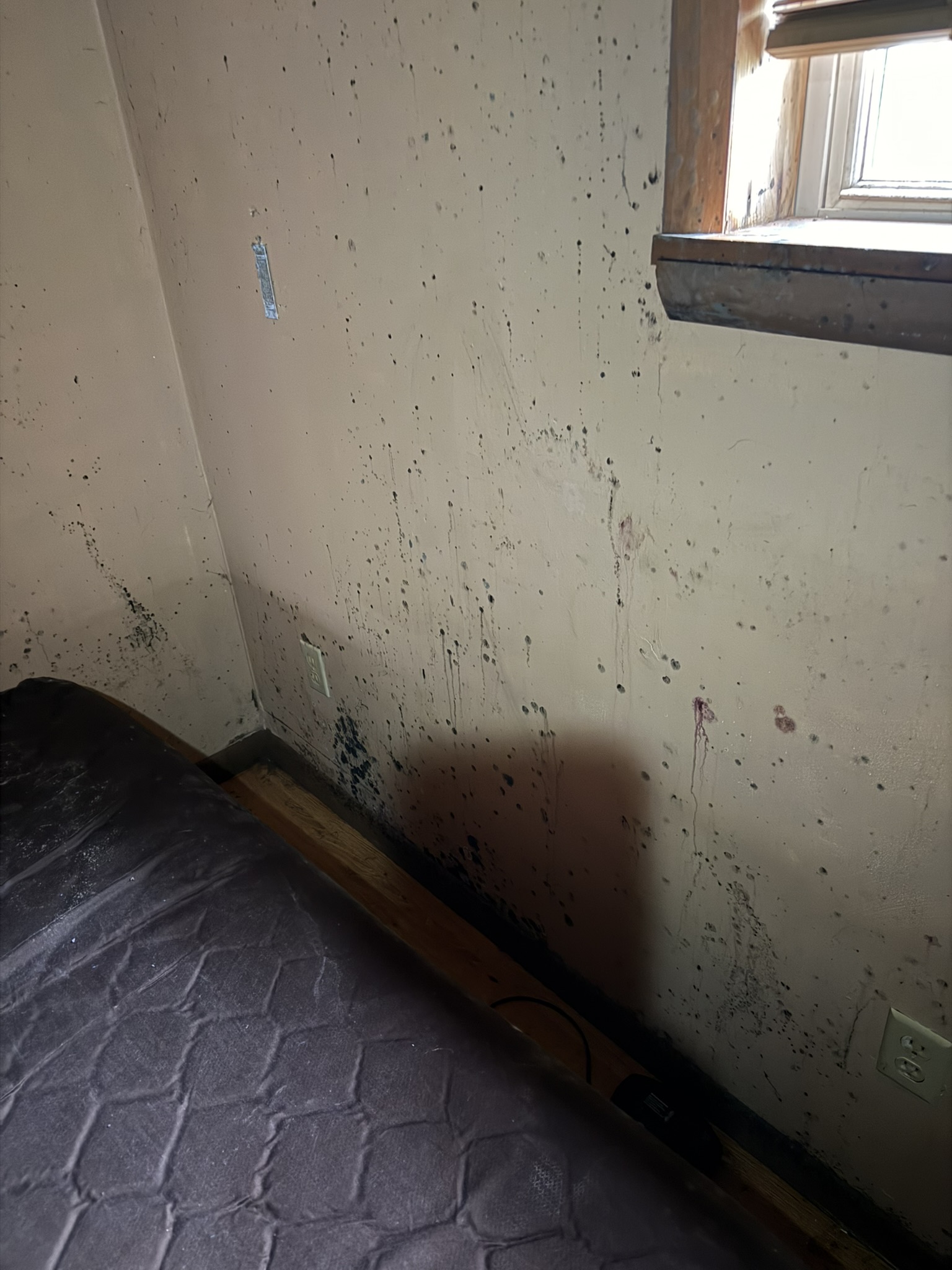
Initial inspection confirmed mold growth on wall and ceiling surfaces throughout five rooms. The contamination was not limited to visible surfaces. Probing and inspection revealed that mold had penetrated drywall in several locations and was present inside wall cavities — growing on framing and behind the interior face of exterior wall assemblies.
The OSB ceiling panels in one area showed particularly heavy colonization, with visible Cladosporium and what appeared to be Stachybotrys (black mold) on the panel faces and seams. An enclosed cabinet space had developed severe mold growth on all interior surfaces — typical of an unventilated cavity that had accumulated moisture over time.
The roof breach was the confirmed primary moisture source. Water had been entering the structure over an extended period, creating conditions throughout the building envelope that allowed mold to establish and spread well beyond the areas of direct water contact.
Important finding: The extent of contamination significantly exceeded what was visible from inside the rooms. This is consistent with long-term water intrusion — mold follows moisture paths through building assemblies, and the visible surface growth is often the last indicator to appear, not the first.
What the Work Involved
Remediation began with establishing containment across the affected areas to prevent cross-contamination during work. HEPA air scrubbers ran continuously throughout the job to capture airborne spores released during drywall removal and material handling.
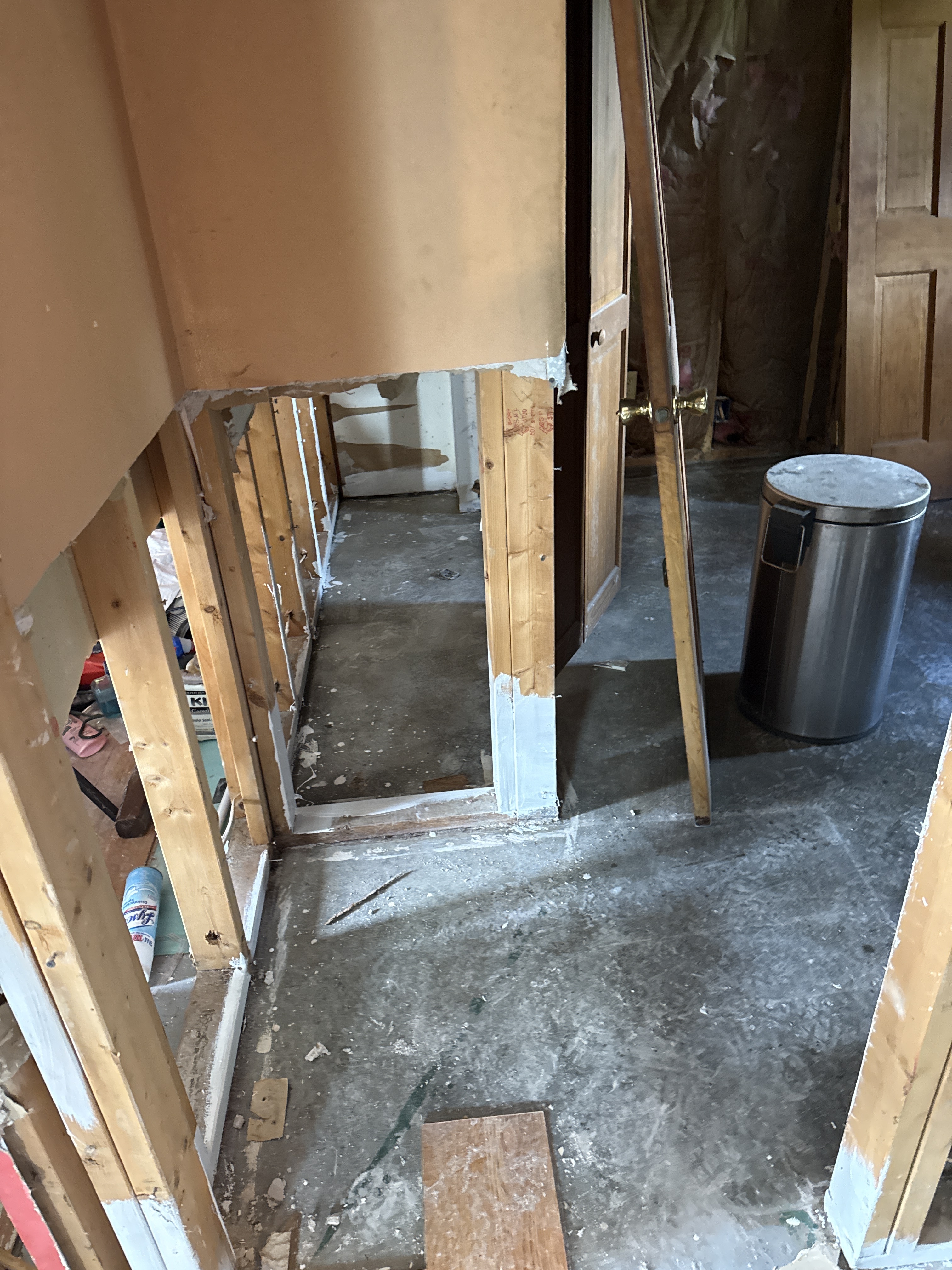
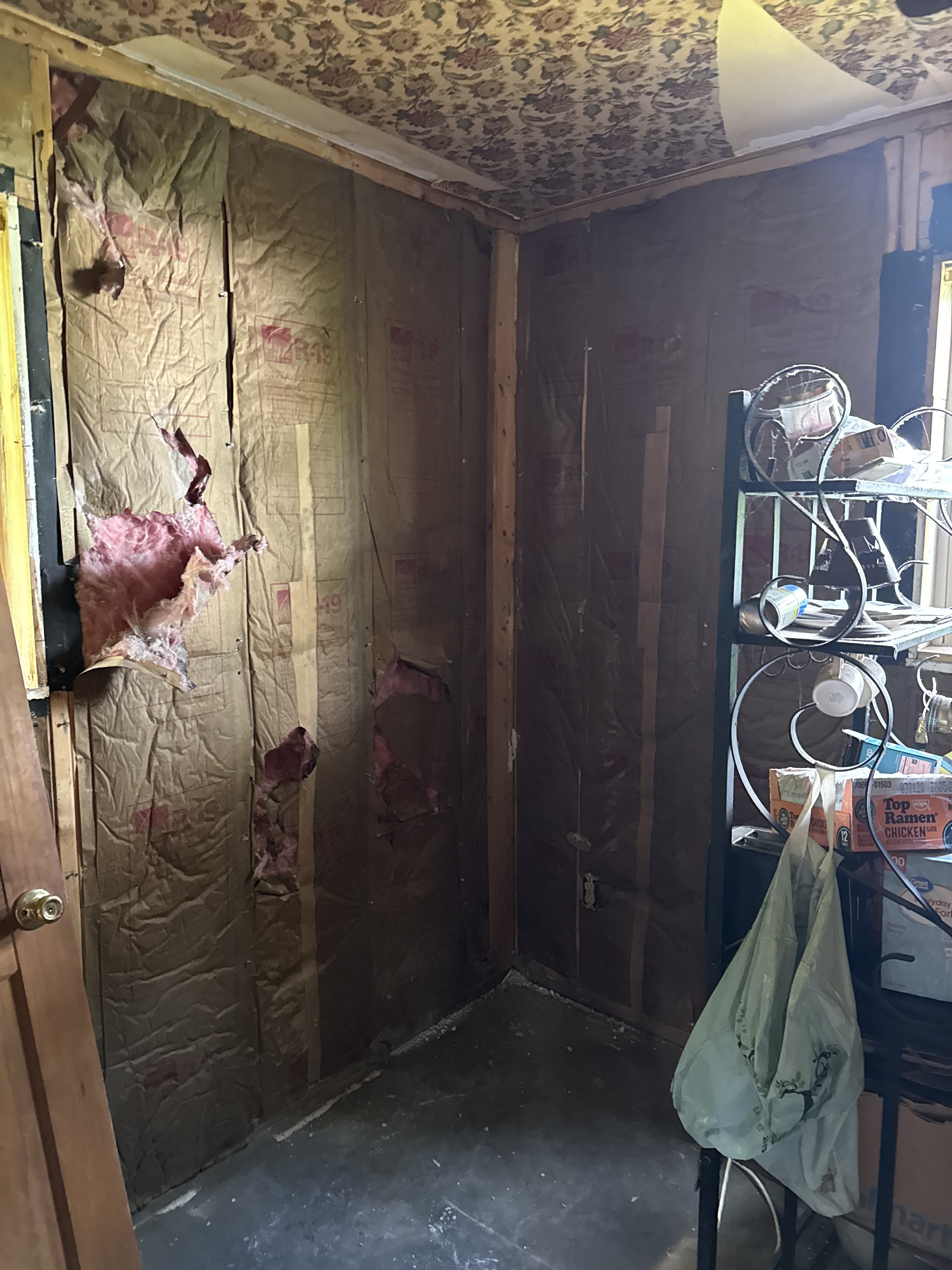
All contaminated drywall was removed — section by section, room by room — cutting back beyond the visible contamination boundaries to ensure we were working to clean material. Where mold had penetrated into wall cavities, the cavity was opened, inspected, and treated. Compromised insulation was removed and replaced as part of the project scope.
After material removal, all exposed framing, concrete surfaces, and structural elements were treated with RMR-141, an EPA-registered broad-spectrum antimicrobial used in professional mold remediation. RMR-141 kills mold on contact and leaves a residual barrier that inhibits regrowth. A preventive RMR coating was applied to framing as a final treatment step before the structure was documented and cleared.
Materials Removed
- Contaminated drywall — multiple rooms
- Mold-saturated OSB ceiling panels
- Compromised fiberglass insulation (R-19)
- Contaminated flooring materials
- All contents of contaminated cabinet cavity
Treatments Applied
- Full containment with plastic sheeting
- Continuous HEPA air filtration
- Full PPE for all technicians throughout
- RMR-141 antimicrobial — all exposed surfaces
- RMR preventive coating — framing and structure
- Before/after photo documentation
- Chain-of-custody disposal records
Post-Remediation Condition
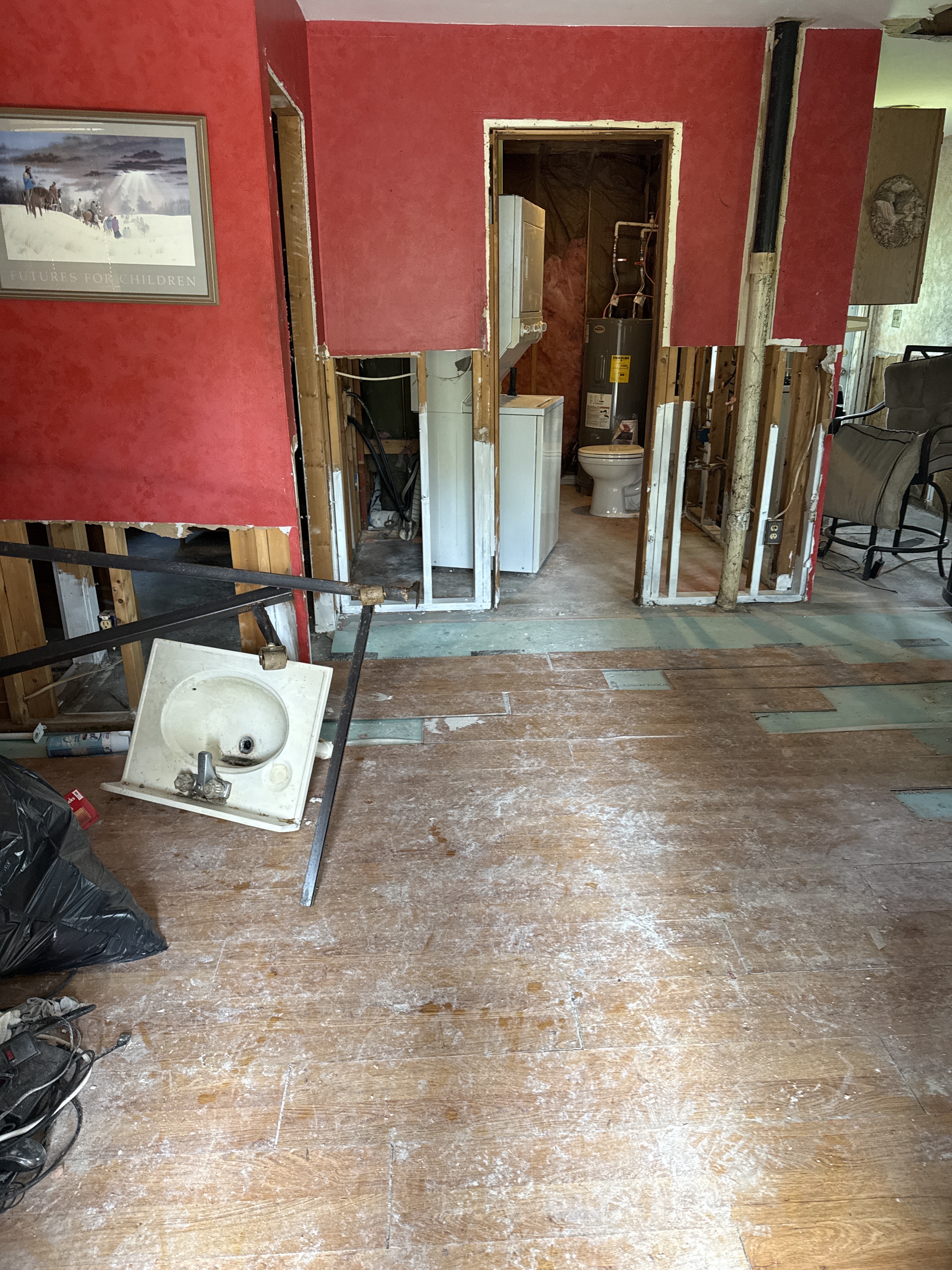
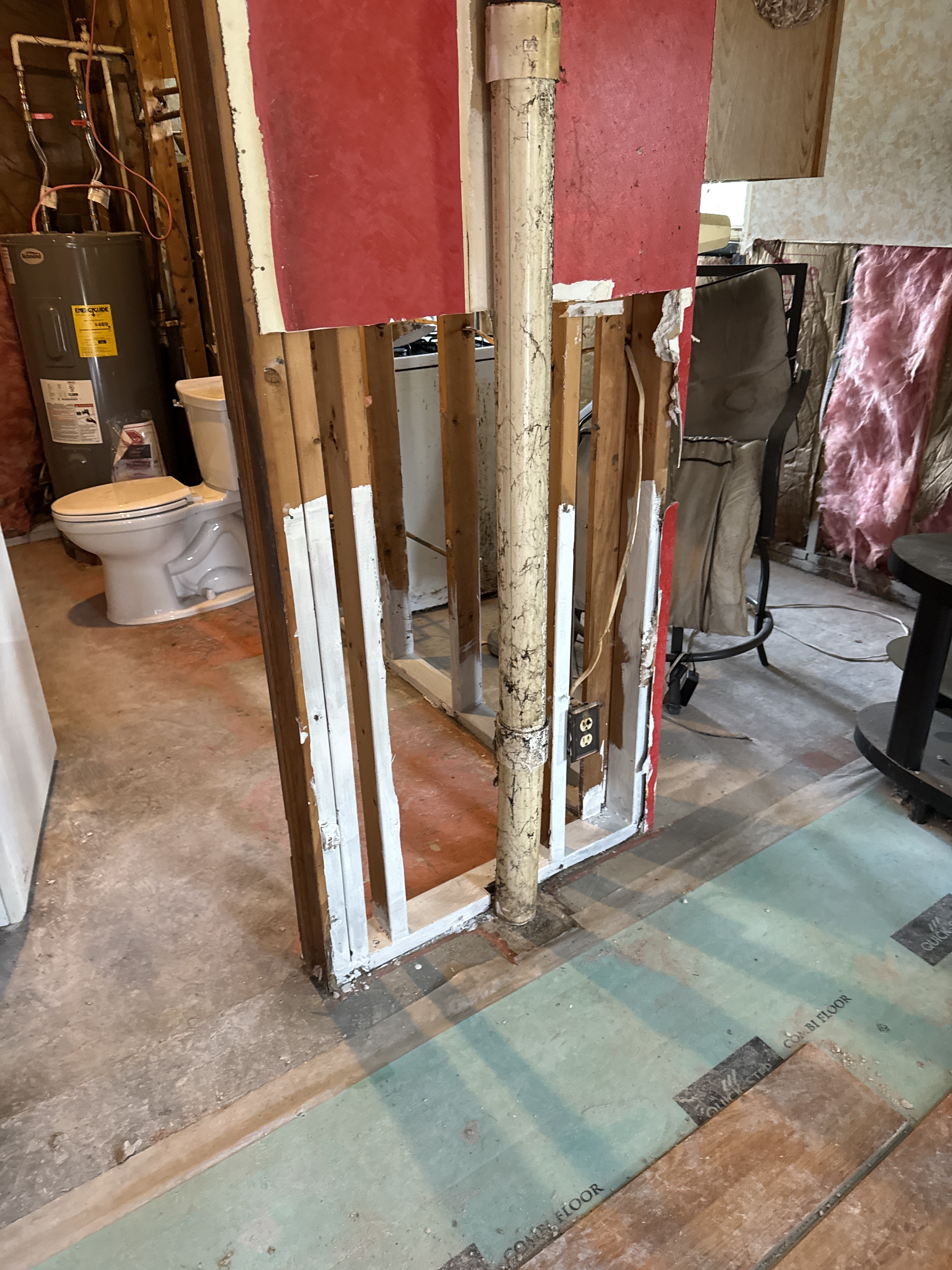
Ready for Reconstruction
After four days of remediation, all five affected rooms had been cleared of contaminated materials. Exposed framing was clean, treated, and documented. The structure was ready to receive new drywall and insulation from the reconstruction contractor.
Full before-and-after photo documentation was provided to the referring government entity and the disaster grant administrator, along with our scope of work, chain-of-custody disposal records, and treatment documentation. This documentation package is standard on every job we complete — it provides the property owner, any funding agency, and future owners with a verifiable record of what was done and how.
Note on Disaster Grant Funding
This job was funded through a disaster grant rather than homeowner's insurance. Disaster grant funding for mold remediation is available in some circumstances through federal, state, and tribal programs — particularly when the mold results from a qualifying event such as a structural failure or documented disaster. If you believe your situation may qualify for grant assistance, contact your local emergency services office or tribal housing authority. We work with grant administrators and can provide the documentation they require.
Key Takeaways for Property Owners
Roof integrity is the first line of defense against mold. A roof breach — even a small one — allows water to enter the building envelope continuously. Over weeks and months, that moisture creates conditions for mold to establish and spread far beyond the area of direct water contact. By the time surface mold becomes visible, contamination of structural materials has typically already occurred.
Mold grows where people can't easily see it. The visible surface growth in this case — while significant — was not the full picture. The behind-wall cavity contamination and the enclosed cabinet growth required opening up the structure to find. Any mold remediation that doesn't include inspection of wall cavities and hidden spaces risks missing significant contamination.
Living with mold has real health consequences. The residents of this property had been living with extensive mold growth — including what appeared to be Stachybotrys — in their sleeping and living spaces. Mold exposure can cause respiratory irritation, allergic reactions, and in cases of chronic exposure or immune compromise, more serious health effects. Emergency services involvement in this referral reflects the seriousness of the situation.
Documentation matters for grant and insurance processes.Thorough before-and-after photo documentation and written scope of work are essential for any grant or insurance claim. Professional remediation with IICRC-certified documentation provides what funders need to close a claim.
Dealing With Mold in North Country, NY?
We assess, document, and remediate. Whether your situation involves insurance, a grant, or private pay — we provide the certified work and documentation the process requires.